138 | Can Psychedelics Heal Collective Trauma? w/ Rick Doblin
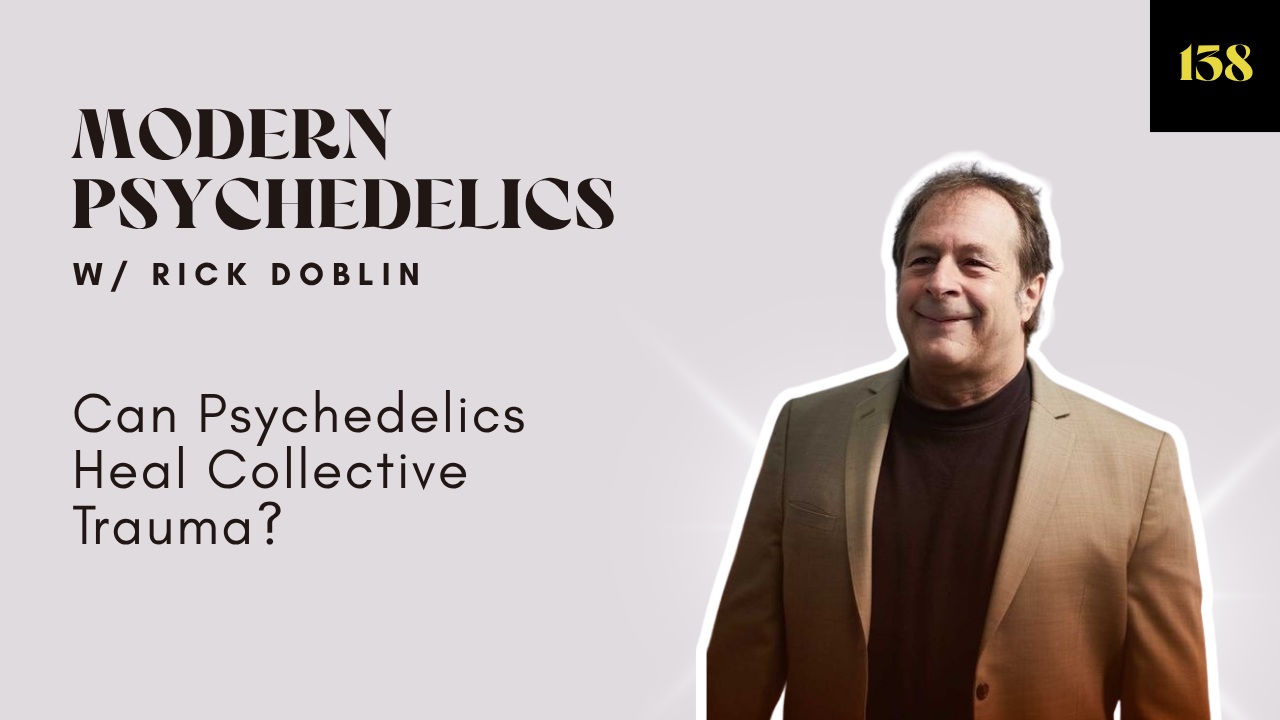
“We need to think of ourselves as embedded, not just isolated individuals, but embedded in families, in communities, and in larger culture.”
Subscribe and leave a review!
After more than four decades working to bring psychedelics into legitimate scientific and therapeutic contexts, Rick Doblin is thinking about a much bigger question: What would it look like to move from healing traumatized individuals to healing traumatized families, communities, and cultures?
In this episode, Lana sits down with the founder and president of MAPS to explore the next phase of psychedelic healing—from individuals to group therapy, families, communities and global humanitarian projects. Rick shares what MAPS is learning from work in Somaliland, Bosnia, Israel and beyond, including the challenge of bringing psychedelic therapy into cultures where Western psychotherapy may not be the right model.
They also explore the relationship between culture and psychedelic progress, the limitations of individual healing in a traumatized world, and Rick’s long-term vision of reaching “net zero trauma” by 2070.
Thank you to our Sponsor:
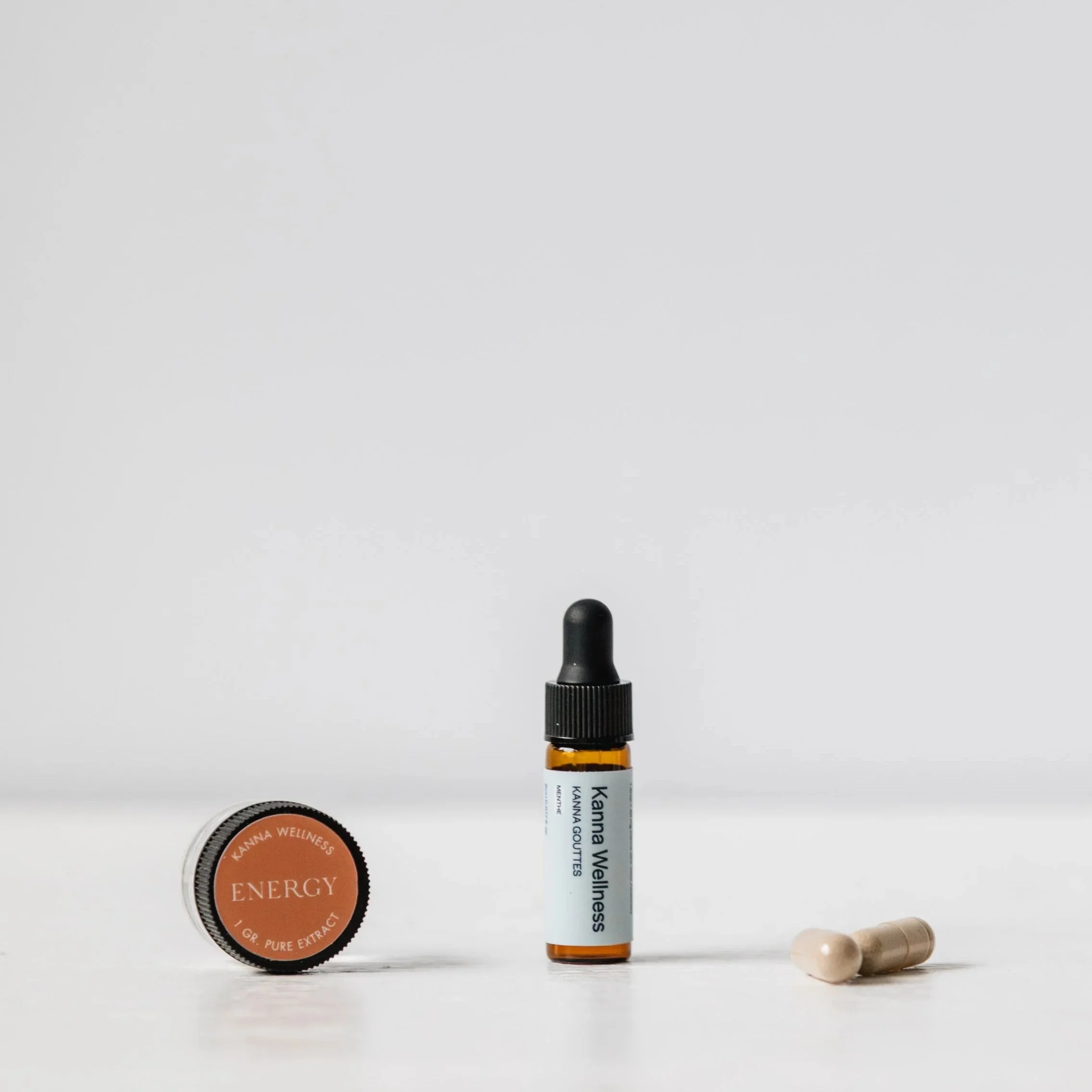
Kanna Wellness
Kanna (Sceletium tortuosum) is a South African plant traditionally used for mood, connection, and calm clarity.
Our formulations are designed for real life—creativity, social ease, focus, and sober-curious living.
At Kanna Wellness, we focus on:
clearly labeled alkaloid profiles
intentional formulations for focus, connection, and calm
ethical sourcing and transparency
third party lab testing & unparalleled potency
Currently shipping within Canada.
Use MODERN15 at checkout to save 15% off
Topics Covered:
From individual healing to community and collective healing
Why cultural change is as important as scientific progress
Group psychedelic therapy and peer-supported models
Bringing psychedelic healing into low-resource communities
Healing trauma in Bosnia and the Balkans
Couples, families, and intergenerational trauma
Culturally specific approaches to psychedelic therapy
Rick’s vision for “net zero trauma by 2070”
LISTEN
Things Mentioned in This Episode
Show Links:
Psychedelically Informed Consciousness Coaching (6 Month Program)
Focused Transformation Coaching (6 Week Program)
Iboga Integration & Prep Coaching (Doing the Work w/ Iboga)
About Lana Pribic:
Lana Pribic, M.Sc., is an ICF Professional Coach, co-founder of Kanna Wellness, and producer & host of the Modern Psychedelics Podcast. With over 230 hours of professional training and four coaching certifications, Lana specializes in psychedelically-informed coaching, guiding individuals through profound inner transformation. Based in Ontario, she merges the power of psychedelics, consciousness, and self-discovery to facilitate deeply impactful experiences. When she's not immersed in her work, you'll likely find her dancing to electronic beats, creating art in the kitchen, practicing patience with her cat, curating her dream wardrobe, or diving into a book.

Looking for a professional coach to support you on your psychedelic path?
Look no further! Along with being the host of the Modern Psychedelics Podcast, Lana is a 3x certified professional coach who works with people on the psychedelic path.
-
Rick Doblin: when psychedelics were banned in 1970 in the Controlled Substances Act, and the US managed to help wipe out psychedelic research around the world for several decades, that was not really based on the science. That was based on the culture. That was based the politics.
So the science is you could say necessary but not sufficient for cultural adoption. But you need the science, and that was the way we could chip at all of the fears that people had.
Speaker 2: Hello, everyone, and welcome back to the Modern Psychedelics Podcast. I'm your host, Lana Pribic. If you have been following along, you'll notice that there has not been a guest interview in a hot minute over here, and I am excited to be bringing you the one and only Rick Doblin today, the man who needs no introduction, as he is quite the celebrity in this space, but I shall introduce him anyways.
Rick [00:01:00] Doblin, PhD, is the founder and president of the Multi- of the Multidisciplinary Association for Psychedelic Studies, MAPS. His professional goal is to help develop legal contexts for the beneficial uses of psychedelics and marijuana, primarily as prescription medicines, but also for personal growth in otherwise healthy people, and eventually to become a legally licensed psychedelic therapist.
He founded MAPS in 1986 and currently resides in Boston with his wife and dog. You guys, I started the podcast about six years ago, and ever since then, I have sent countless emails to MAPS and, and messages to them asking for Rick to be on the podcast, and I, I kinda lost hope that it would happen one day.
I mean, the man is booked and busy, as you will hear about in this podcast. It's, it's just incredible all the projects he has his hands in. So how did it [00:02:00] happen? I mean, he's not the easiest guy to get on a show. So about two months ago, i- here in Toronto, I was asked to moderate a panel discussion for a documentary about MDMA that had just come out.
It's called The Prophet of Ecstasy, and Rick Doblin is featured in this documentary. As such, he was invited to be a panelist on this evening in Toronto. There was a showing at the Hot Doc Cinema of the film, and then there was a panel discussion after. So through this encounter, I got to meet Rick.
I said hi to him after. I gave him some Kanna. Of course, I had to give him some of nature's MDMA. He's the, the the father of MDMA, at least in our modern context. So I had to, I had to sneak some legal nature's MDMA light to him, and I said, "You know, this was so amazing. So nice to meet you. I've been, I've been trying to [00:03:00] get you on my podcast for so many years, but this was even better.
Like, we got to share a stage and, and, and talk like this in person." And he, he's, he's so lovely. He was like, "Oh, like, I would love to come on your show. What's, what's the name?" And he gave me his assistant's, contact, and we coordinated it from there. So that's a fun story for you. But yeah, check out Prophet of Ecstasy.
Um, if you're in Canada, it is on CBC Gem for free, but it's a great documentary about kinda the underground world of MDMA back in the '80s, '90s era, and Rick definitely has some great commentary. But about our episode today. I wanted to take a different approach with Rick today because, I mean, he's spoken so much about MDMA and policy and, and maps and logos and, and all of that, that it, it's also not really my style.
This show is not the show you come to for, like, [00:04:00] policy and research updates. So I decided to take this approach of speaking to Rick about something that's very exciting for him right now, and that is This, this shift that we're seeing right now in, psychedelic research, the shift is from can MDMA and psychedelics heal a traumatized individual?
And now we're starting to look at the question of, uh, whether psychedelics can play some role in traumatized societies, traumatized cultures, traumatized communities. So we have a very beautiful, rich conversation around some of the work that Rick is kinda lining up to ask this question, and also to implement these various group therapy protocols in different countries that are under-resourced and over-traumatized, as [00:05:00] he calls it.
One of those countries, uh, that Rick actually has a project in is Bosnia. For those of you who don't know, my family in the early '90s was displaced, um, from what is now Bosnia, formerly Yugoslavia. And so that was really touching. I, like, genuinely almost cried when he started talking about this project called Healing Balkans, and I think it's so cool that that even exists.
So this conversation is not only just so inspiring and touching, but also, yeah, very, very deeply personal for me. , Yeah, I don't think, I don't think you've heard this Rick Doblin conversation before, so I hope that you enjoy it, and without a further ado, let's get into it
Lana Pribic: Hi, Rick. How are you doing today?
Rick Doblin: I'm doing pretty well. It's this warm, sunny day. I'm getting better from being sick and [00:06:00] looking forward to our discussion
Lana Pribic: Me too. I met you a couple months ago, and I know you've been having a really busy summer. What's been standing out to you about this summer and the work that you've been doing the last few months?
Rick Doblin: I just came back from the Iceland Eclipse Festival, which was pretty amazing. My favorite panel there was astronauts and psychonauts. And so it was talking about the overview effect that a bunch of astronauts have talked about, where you see the Earth from space, and you realize we're all one, and we're all from one thing, and you don't see the religions and the borders.
And then I talked about how you can have a similar experience with psychedelics, and how it's a lot cheaper to take somebody and give them some psychedelics rather than shoot them up in space. But how the, the, the general overview effect does hopefully lead towards more compassion, more global thinking.
That was really a, a wonderful part of the summer. We're also trying to start research in Iceland [00:07:00] with psychedelics. It's a very mystical culture, and the nature is incredible. That was pre-pretty exciting. But we're also doing projects all over the world.
I've been in Israel, Lebana-- Well, Lebanon we have got a project coming up in Lebanon. I was in Palestine, in the Golan Heights. And one of the things that really , stood out for me was this idea that if you focus on healing, you can cross all these different political barriers. And so that, that was really reassuring to, to be both working on multiple sides of the conflict.
And I would say that what that has also meant is that in the United States, we have managed to get bipartisan support for psychedelics. And one of the very few things that is outside of the culture wars in America is psychedelics. And I think that's been a conscious strategy of ours, and we've both accepted donations from people from all over the [00:08:00] political spectrum and worked with veterans and others, which really has helped that.
I, I will say, though, that one of the things that's I think been extremely helpful is-- but also somewhat disappointing to some extent, is that you can take psychedelics and you can stay Republican.
That it doesn't necessarily change your personality. That, that-- or it change your political things.
Even though this idea of this overview effect and that you see we're all connected, you work through your traumas, you don't see the lens, that it's more of a cultural thing from psychedelics in the '60s and people were hippies and against the Vietnam War. And, so psychedelics got identified with the counterculture. And, back then I kind of identified, starting in 1972 really, where I devoted my life to psychedelics identified myself as a counterculture drug-using criminal. And the arc of my life has to be um, from counterculture to culture, from criminal to legal, and I've found that psychedelics make sense throughout the lifespan.
And so [00:09:00] I've continued with that effort and that-- those experiences. And so I think that I um, overestimated the role of the psychedelic and underestimated the role of culture in producing these kind of attitudes in a way. And I think in a way I'm really glad I was wrong about that that people from all sides of the political spectrum can take psychedelics and not worry that all of a sudden they're gonna, become hippies or anything like that.
I think that's really good. But I think it also is in the bigger field, there's been this overvaluation of the role of the psychedelic and the undervaluation of the role of therapy and the role of integration, which, which in a way substitutes for culture in a sense, in some ways. Yeah, so I've been around the world.
In Paris I had a really interesting opportunity to spend a bit of time with the head of the National Institute on Drug Abuse, Nora Volkow And, NIDA has been, in the past, the biggest purveyor of misinformation [00:10:00] about drugs, trying to justify the drug war. Even they don't say anymore that marijuana causes lung cancer, but that was something that they said before.
But they did do a lot of the research on MDMA neurotoxicity. And back in the '80s and '90s, NIDA was the big funder of research designed to show that, MDMA causes brain damage and holes in the brain. And, and that culminated actually in around 2003 when there was a report that MDMA could cause damage to dopamine neurons and could cause Parkinson's.
And that was outrageous, and, there was no basis and it just made no sense. But as it turned out a year after this article was published in Science, with the, the former head of NIDA saying that taking MDMA was like playing Russian roulette with your brain they acknowledged that this research was fundamentally flawed, and that instead of giving MDMA, they had mistakenly given methamphetamine to these primates.
And so [00:11:00] that, that's been the high-water mark for the MDMA neurotoxicity concerns. But to see the head of NIDA now talking about how she sees value in psychedelics, and, NIDA has funded for the first time in 50 years a study with psychedelics looking at their benefits.
This was to Matt Johnson at Johns Hopkins looking at psilocybin for tobacco cessation. So it's been a real wonderful summer, and I'm sad to see it coming near to an end.
Lana Pribic: Yeah, it sounds like you've been very busy, and it sounds like there is a tide that is turning a little bit right now with culture and society, and I really do want to talk to you about that side of the work that you're doing right now.
Let's get into this idea of... I heard you talk on another podcast that you did in the spring about politics being downstream for culture and
how that relates to psychedelics. [00:12:00] So what's the bridge here that you're imagining? Is it like psychedelics can create change or ignite the individual, and then individuals influence culture, and eventually culture changes institutions?
Or like what's that link there that you're
Rick Doblin: I would say that there's a big-- the biggest link there is is science and research. So here we are in America where the newspapers, the media all sorts uh, reports on a lot of the latest scientific developments. And so what we needed to do with psychedelics that had been demonized, that had been highly stigmatized, driven underground, psychedelic research blocked for decades we really needed to change cultural attitudes in order to create the context by which regulatory agencies and politicians and others would feel comfortable seeing psychedelic research move forward.
And in my own life, when I was 18 back in 1972, [00:13:00] I decided to become an underground psychedelic therapist or, with the goal of one day being an above ground psychedelic therapist and to bring back psychedelic research. And I, Dropped out of school for ten years to start up again after having done work to integrate my own experiences, and then graduated in '87 with a undergraduate degree in transpersonal psychology and psychedelic therapy and research, and then wanted to get a clinical psych PhD in order to do psychotherapy outcome research to show the value of psychedelics, particularly MDMA.
But nobody would let me in because psychedelics research had been blocked at that time, MDMA had just been criminalized. So that's where I s- realized that the politics was blocking the science, and so to do the science, I needed to study the politics. So that's where I switched to the Kennedy School of Government at Harvard and got my master's and PhD from there.
And in a sense, when I switched from studying to do individual therapy to studying to do cultural therapy for a sick [00:14:00] public policy. And so I recognized that we really needed to do cultural change in order to move the psychedelic psychotherapy forward. And that cultural change began with the struggle to do scientific research.
Because when you have such a general consensus that psychedelics are disorienting, that they're delusionary, that they're harmful, that they're drugs of high potential for abuse and the media's all doing that the, the key lever was gonna be science. Was gonna be through the FDA, through doing studies, and then both science and then stories of healing from various people.
So what I like to say is that the regulatory agencies need data, but people need stories. So the cultural change that we were trying to generate relied both on getting permission for doing studies so that then [00:15:00] people could stand up and feel comfortable in saying, "I did this in a legal context, and this was helpful to me."
And so we definitely had a kind of two-pronged strategy. One is public education through media and whatever we could do, and then also doing the science. And eventually one of the things that I had never predicted when I started MAPS back in 1986 was the rise of the for-profit psychedelic companies.
It was just shocking to me because I had thought, there's so many political obstructions to even starting research the idea that there would be a whole industry focused on developing psychedelics. And now we have incredible-- we have AbbVie and then also Tsuka, and then also Johnson & Johnson with ketamine, and then more recently Eli Lilly.
And we have all these big pharma companies coming into it. I never would have predicted that. But also I never would have predicted that they would... And this was foolish [00:16:00] of me, but that they would really just wanna sell drugs and not emphasize the therapy. Because when you emphasize the therapy, people get better results, but they don't need to keep buying the drugs as much.
And so the pharma company is, of course, interested in selling drugs. They're not designed to optimize outcomes for patients. They're designed to optimize outcomes for shareholders. So you could say in a way that the cultural change succeeded beyond my wildest expectations. And really it didn't begin until around two thousand and seventeen.
So from 1986 to 2017 it was all philanthropic funded, all of the research, both through MAPS, through a group called Heffter Research, Council on Spiritual Practices, Beckley Foundation. Collectively, we've raised around three hundred million dollars in donations. But now there's over nine billion dollars by for-profit investors and for-profit [00:17:00] companies.
So what began this sort of flood of funding was also in November twenty-ninth two thousand and sixteen, we had the end-of-phase-two meeting with FDA to talk about MDMA-assisted therapy for PTSD and FDA said, "Yes, you can go to phase three." And then we proceeded to do an eight-month negotiation called Special Protocol Assessment, and FDA agreed with us on all the different designs, of how we would do the phase three studies, and it also gave breakthrough therapy designation.
So once it was clear that the FDA was open to this, that's where investors and for-profit money started coming in. So it's less than a decade of the forty years that MAPS has been at, that there's been even a hope of for-profit. But I think that the thing that's really been driving that is the cultural change
Lana Pribic: Yeah. I guess culture and society put money where their mouth is, and the fact that there's just so much funding coming into psychedelic research now says a lot [00:18:00] about where we are as a
Rick Doblin: yeah. And the sad part is that, when psychedelics were banned in 1970 in the Controlled Substances Act, and the US managed to help wipe out psychedelic research around the world for several decades, that was not really based on the science. That was based on the culture. That was based the politics.
So the science is you could say necessary but not sufficient for cultural adoption. And the cultural prejudices and political benefits that people get by going after or for certain things really matter more than the science. But you need the science, and that was the way we could chip at all of the fears that people had.
And then now we're in a position where part of our work is to try to tell the for-profit pharma companies, or demonstrate that when you add therapy, it really is better for patients, and that we're in a mental health crisis. There's no end of patients. They don't really need to keep treating the same people [00:19:00] over and over.
If they can actually work towards cures, which are possible, doesn't work for everybody, but is possible, you'd end up charging more for the drugs, and you end up doing better for society, and there's an endless number of people that will come into treatment. There's an estimated 13 million Americans with PTSD alone. So I think that a lot of our work is really now trying to do the kind of public education that we had to do at the very beginning. And then the other big part of our work is going global and trying to bring MDMA-assisted therapy and other psychedelic therapies around the world, particularly to high-travel, low-resource countries
Lana Pribic: Yes, and I wanna talk to you about that 'cause I have a very special connection to But I do also wanna say Rick, thank you so much for the endless work you've been doing for years to really create this cultural change where, you said that people need stories. Politicians need science [00:20:00] people need stories, and I started this podcast like six, seven years ago just sharing about my experiences, and it's been so tremendously helpful for so many listeners around the world.
And that's only been possible because of, the work that's been done by people like yourself to create this cultural change through the science and the research. So thank you for that.
Rick Doblin: Yeah. I, I really appreciate that. And, it was also strange to see how in many ways America is the leader of this psychedelic renaissance. With a lot going on in Switzerland in small ways is really helping 'cause that's where Albert Hofmann was
He invented LSD.
So there, there's been psychedelic therapy and psychedelic training programs in Switzerland since the '80s actually, but then it was shut down for a while during the '90s, and then it reopened up in, in this new century. But that there is this real recognition now that there are opportunities [00:21:00] for healing that the traditional pharma companies and the traditional pharmaceutical medicines didn't address.
And the other thing when I talk about stories, just to emphasize back in the American context, is the transition that we've made about marijuana and how marijuana is handled in America. But it began with discussions about medical marijuana
Right
And once medical marijuana started happening in different states, and then people could say, "It's helping me in this way or that way," and they could say, "In my state it's now legal," so they could step up and tell their stories without as much fear, that changed people's attitudes.
And so now there's marijuana legalization for adult use in more than half the population in the country.
Mhm
And the polling, is pretty sophisticated by the people that are doing these initiatives and legislative campaigns, things like that. And one of the most important factors of why somebody is in favor of the legalization of marijuana is that they know a medical marijuana [00:22:00] patient. They don't know what to believe. There's so much misinformation, so much fear-mongering, so much confusion. But if somebody they know and trust says, "This helped me," that's what causes them to change, and then they question everything. So that's why I think the work that you've helped done to tell stories, to help people tell their stories, has a phenomenal impact in the culture
Lana Pribic: Yeah. Yeah I completely agree because stories are so personal, and not everyone is moved by science and research, and so that's where the stories become so important alongside the science and research. Amazing. When I had you fill out a little intake form for the podcast, you mentioned that you wanted to really speak about global humanitarian studies.
What do you mean by that? And how does it relate to psychedelics and psychedelic research?
Rick Doblin: First off, we talked about astronauts and the overview effect, and we're all connected in certain ways. Thinking about humanity as a whole, I guess there's [00:23:00] somewhere like eight billion people or something like that. There's an enormous burden of trauma that people carry, and depression and anxiety and fear and all, all the different psychiatric indications.
And so wh- what has happened over time is that MAPS was initially funded through donations, and then we ended up making a big mistake, I think, which was r- thinking that we needed to commercialize. We raised all the money from philanthropy to do even the phase three studies. But then we got this advice that we needed to spend sixty or seventy million dollars to prepare for commercialization for what we thought would be a success through the FDA.
And we couldn't raise that much money from donors that quickly. We were unable to do that. So we started taking investors, and then we started hiring people from the traditional pharma industry to help us with marketing and so we lost control of the company, and then they started trying to do traditional [00:24:00] things in traditional ways, which doesn't work for something innovative.
And then we had the FDA rejection in twenty twenty-four, and then I realized that we needed to bring in new management and new owners. And I did manage to bring in two new owners. One is Antonio Gracias, the other is Sir Christopher Han. And it's-- we cr- we had created a public benefit pharmaceutical company, initially wholly owned by the nonprofit, but now it's off on its own and we don't control it, and we're only a very small minority shareholder of it.
But the owners have said as part of their public benefit mission that MDMA will be generic in all of Africa, all of India, in Lebanon, and many other low and middle-income countries of the world still to be specified. And so Resilient Pharmaceuticals is the name of the company. A couple weeks ago, they resubmitted a new drug application to the FDA-- after the FDA rejection in twenty twenty-four.
[00:25:00] And there's a real good chance within the next six months or so that there'll definitely be some response from the FDA, and there's a good chance that it'll be approval potentially in in a limited sense. So the company is focusing on the United States and is thinking potentially about Europe.
But While they're making MDMA generic in Africa, India, Lebanon, and other low- and middle-income countries of the world, they're not doing anything to bring MDMA there, meaning they're not training therapists, they're not funding small pilot studies. They're really concentrating, at least for now, on the United States and just beginning to think about Europe.
So MAPS, the nonprofit, is basically saying, "What are the non-monetizable projects that we can do that require philanthropy?" So as I said, there's nine billion dollars plus into the for-profit psychedelic sector. And so many people think, [00:26:00] "Why do anything with psychedelics? The for-profit people are gonna do all of that needs to be done."
But the for-profit people only do stuff where there's a profit. So the non-monetizable things are bringing MDMA around the world and helping other psychedelics train therapists. And so these are non-monetizable projects that clearly need philanthropy. And so that's gotten me now focused on the global humanitarian projects.
And what they are potentially about and why they're so fascinating is that we're gonna see about does psychedelics work in different cultural contexts? And not only that, but for example, in Rwanda where there's, there was the genocide, there was enormous amounts of trauma, but there's hardly any therapists or psychiatrists, but an enormous burden of trauma.
So who are the local healers? So we're gonna not only have to see if [00:27:00] psychedelics can be translatable, you could say, into different cultural contexts, but also who are the ones that are gonna deliver it to the other people in that culture? We can't rely just on psychedelics to being delivered by psychologists and therapists and psychiatrists where in many countries there's hardly any of them.
I'll just say that I think it could be midwives, it could be death doulas, it could be nurses, it could be religious leaders, chaplains, the different religious contexts. It could be social workers. We'll find out. There's a project I think in Tanzania called Grandmothers on a Bench, where grandmothers have been trained to do minimal kind of therapeutic counseling.
And so they're paid to just sit on a bench, and people come and tell them their problems. So it's kind of a low-cost people who talk about What is it? Effective altruism. The lowest cost to get the greatest good. They like this Grandmothers on a Bench idea.
So I think the exciting part is not only different cultural contexts and different kind of healers, but it's the [00:28:00] move from treating individuals to group therapy. And so I think the way that the regulatory agencies want the research done, it's one drug for a single individual patient, and then you just have hundreds of these in your studies, and you gather data like that.
But that is more labor-intensive. And also, when people have been traumatized often having group support can be really helpful. And we see this in America and around the world with Alcoholics Anonymous, which is just a wonderful way for groups to support each other with peer support as well.
So I think the Global Humanitarian Projects are a way to think about humanity as a whole and to go where there, there's often a 10 or more year lag between drugs that are approved in the first world before they get to the third world, and sometimes they never do. So that, that's where MAPS is [00:29:00] now trying to pioneer bringing MDMA around the world to different cultural contexts.
Our project in Somaliland in Africa is one of the best examples of that. It's really our first example. And there was an American psychiatrist, Dale Armstrong, who I've known for quite a long time, who decided to give back from the benefits that he had from being an American and, being a psychiatrist to give back to Somaliland.
So he's been building a mental health clinic in Hargeisa Somaliland. And so we've trained Somaliland therapists, and we actually got a protocol. The first protocol to be approved in Somaliland was to give MDMA to therapists as part of their training, and we've already done that. And now there's 35 grams winging its way from Canada to Somaliland right now for a bigger study that would be for people with mood disorders.
'Cause the, the other thing we noticed is that in America, people are [00:30:00] sophisticated consumers of psychiatric diagnoses. People are like, "Oh, this is PTSD." "No, that's depression." "No, that's OCD." No, that, that's anxiety. But they don't think that way really in Somaliland.
And also, we noticed that they tend to somaticize their problems as well. So they don't speak so much as depression or anxiety, but, "Oh, I've got this pain in my chest, and it's been bothering me for years," or, "I've got this digestive issue," or... So the healings can often look differently. One of the women in Somaliland, though, that was a therapist that went through this worked on some very somatic healings that she got.
But then she said she really wanted it to be for her mother and her sister. So that's where you know that you've made this cultural translation. So I think the other part of this is Bhutan, which has gross national happiness. So they've created a measure of happiness that applies to countries all over the world.
[00:31:00] But it's made me think that we also need gross national trauma measure. That will be millions of dollars to create, and it would be very difficult because a lot of countries do not want to really quantify the amount of sexual abuse or the amount of crime or the amount of refugees or migrants or, involuntary slavery, of people being, like working, coerced workers or all, all the things that create trauma.
But it's got me again thinking about global, thinking about trauma, and thinking about a metric to measure success over the next 45 years or more. It's taken us 40 years to get to this point where the psychedelic renaissance is alive and well, and it looks like things are on track in the United States for approval of MDMA and psilocybin and eventually 5-MeO-DMT and other things. And so-- and that's being taken care of by the for-profit funding. But what's [00:32:00] not being done is global access, and people are suffering there as much as they are in the US, probably, in greater numbers. So that, that's sort of the heart of the idea of the global humanitarian projects.
Speaker: If you have been listening to this podcast for a while, you have probably heard me talk about kana, and today I wanna share something really, truly special. I started Canada's first kana company, Kana Wellness, because I truly, truly believe that this plant has a place in hectic, chaotic, undersupported modern life.
Kana is a psychoactive plant. But it's not psychedelic, it's a gentle, grounded, and incredibly supportive little plant from South Africa's desert region. It can help with uplifting mood, promoting cognitive clarity and focus . Gently supporting energy, relational [00:33:00] openness, and nervous system balance, it's quite remarkable.
So whether you're working, creating, connecting, or just trying to feel a little bit more grounded in yourself, kana meets you where you're at. And what I love most about KANA is how versatile it is. You can use it day to day for mood support, calm and presence, replacing traditional. Psychedelic micro doses, but it also has an amazing place in social settings supporting sociability and connection without the crash or chaos of alcohol and other substances.
Like I said, it's em pathogenics, so you're gonna get that nice heart open social feeling with it, and it can even support performance and recovery or be used for inner immersions and emotional processing when you want to go inward. KANA is an empathogen, which means that it's heart opening while still being [00:34:00] grounding, presence, enhancing and clear.
It's gentle, yet surprisingly effective, and it's a sober friendly alternative for recreational spaces. It is something that's suitable for daily use with a strong body of research behind it. And a solid safety profile. So if you are in Canada and you're curious to explore, you can shop@kanawellness.com.
And for my dear podcast fam, here, I have a special code for you, modern 15 for 15% off your first order. So shop now support my little business with my mom. At kana wellness.com, that's K-A-N-N-A wellness.com. That's linked for you in the show notes, and it's modern 15 for 15% off your first order.
Lana Pribic: Yeah. Wow. So how long have you been focusing on that now, would you say?
Rick Doblin: I was [00:35:00] always focusing on it a little, but I would say mainly just like the last five years.
Lana Pribic: Okay. Wow. So yeah, that, wow, that's so ambitious. It kinda makes head spin just thinking
about-
Rick Doblin: uh, you know, I think one of the things I like to say is that if your biggest dreams are something that you can accomplish in your own lifetime, then they're too small.
Yeah.
So yeah it's ambitious. But when people talk about ending hunger or providing clean water or ending slavery or, ending gender discrimination the- these are things that take multiple generations.
And also I just wanna say that one of the biggest movies in America these days is The Odyssey, which I've not seen yet, but I'm looking forward to it. But the point I wanna make about The Odyssey is that it was written thousands of years ago, and it is relatable to us today.
People have not actually changed that much,
But what has changed is [00:36:00] technology, and we're capable of disasters at a greater magnitude, sorry, than ever before.
And so the, the sort of diagnosis of the human condition was really well said by E.O. Wilson, who was an entomologist at Harvard, and he said, "The real problem with humanity is that we have Paleolithic emotions with medieval institutions, with God-like technology." And from that, and this is what the astronauts talk about in the overview effect, is we need to elevate our emotional and spiritual capacity to make up for the incredible development of our technology and of our intellect, but we're out of balance, and look what we're doing to the climate, and look what we're doing to autonomous weapons killer robots, and nuclear weapons.
And so thinking globally is like, Everybody now knows that we had the pandemic, and that affected the whole world. We have the internet all over the world. We have [00:37:00] nuclear weapons can go everywhere. We, so people in general are thinking more and more globally. But there's a, a counter-reaction, which is to go, "Oh, America first," or to think about your local place or your religion or, to retreat from this global thinking.
But the global thinking doesn't mean one world religion or one country or, it, it just means that we do have certain issues that need to be addressed globally. And, that's why the League of Nations was created. That's why the United Nations was created. And so I think thinking about global mental health facilitated by psychedelics is sort of in tune with the times.
Lana Pribic: Yeah, I guess it is the next step for us in the psychedelic space. We've kind of-- We're on our way to mastering individual therapy and getting that to people. So yeah, you're ahead of the times and with the times
Rick Doblin: yeah, the, the-- one of the most important studies MAPS has local affiliates. Not local, but national affiliates. So one of the, one of the ones that's doing the most work is [00:38:00] MAPS Israel. And they're doing in-- what I think is one of the most important studies in psychedelics in the entire world right now because it's the only study of any psychedelic therapy for any condition where there's a direct comparison of individual therapy versus group therapy.
And this is gonna take a couple more years to complete. It's just recently started. But if we can get evidence to suggest that group therapy is more or less the same outcomes as individual therapy, that's gonna be the real key to scaling, to reducing the costs. Won't reduce the cost of the drug but it will reduce the cost of the therapy and the context.
And eventually, we hope these drugs will become generic so that there will be reduction in the cost of these drugs as well. But I think this concept of how do we use groups to help each other? And then the groups can, I think, be especially [00:39:00] valuable in the integration process with peer support as well.
So the w- the first group therapy study actually began at the Portland, Oregon VA. Chris Stoffer was the principal investigator. And it was initially just four therapists with six veterans. And it started with an individual session and then a, a group session. So everybody got introduced to the drug in an individual session, but then they had a group session.
But after he had done two cohorts of six each everybody wanted another, a third MDMA session, so he added it as a group session. But in the subsequent group sessions, and in the-- then he did two more cohorts like that. He would have, instead of four therapists, he would have several therapists, but peer support from people that had been through it before.
So I think the group therapy offers this incredible opportunity for peer support. And whether there's somebody like that you identify with that's been a similar struggle, similar [00:40:00] emotional struggle, similar kinds of trauma, and they've been through something that is healing to them, they can be particularly helpful even without, years and years of training to be a therapist. So I think that's some of the things, again, that the global humanitarian projects offer this, this opportunity to learn about.
Lana Pribic: Yeah. Yeah, I love that the focus is on offering, I guess the idea would be to offer group therapy as a way to address more communities and societies rather than individuals,
Rick Doblin: And particularly what what I'm also looking forward to, and what we're doing in the US a little bit, is this idea of families. So that when you have families that are refugees or migrants or have been driven out of their homeland because of wars or climate change that makes it so they can no longer farm and no longer survive that you have whole families that are traumatized together.
And so not only are we talking about groups, but I think we're gonna move into this idea of helping families who've been traumatized. Traumatized kids will [00:41:00] feel most comfortable with their parents usually. So there's actually two studies that I wanna talk about. W- The FDA has so far said that the lowest age that can be in an MDMA study is 18.
But there's no upper age limit. It's not about age, it's about health, it's about heart. But there are two studies. One is gonna be at McLean Hospital with Harvard Medical School with 18 to 26-year-olds with PTSD from childhood trauma. Another is gonna be at UCLA. It hasn't started yet.
It'll take about a year to start. Also with 18 to 22-year-olds. And those are in preparation for using for moving down to adolescents and younger people that have been traumatized. And if you look at the traditional cultures that have integrated psychedelics, like the Native American church with peyote and the ayahuasca churches, they don't have age limits like that.
I went to a Native American church peyote ceremony, [00:42:00] and a Navajo man brought his nine-year-old son
Uhum.
the night eating peyote. So anyway, I think this idea of helping families is really key. And there's this, the interesting step into the Veterans Administration was about this sort of sense of family.
I started trying to offer funding to the Veterans Administration in 1995 to do MDMA research. At that time, they had several hundred thousand Vietnam vets permanently disabled with PTSD, and they were paying over $4 billion a year in annual payments, disability payments. So I would talk with doctors and therapists, and they would be really interested inside the VA, but it would be squashed by the political level.
And I'd try ever again every few years, and about four times that blocked. But then in 2014, with the help of Richard Rockefeller, who was a doctor, and his cousin, Senator Jay Rockefeller, [00:43:00] who was the senator from West Virginia, but he was on the Senate Veterans Affairs Committee they helped us persuade the VA to work with us, excuse me, to explore the potential of MDMA But what they wanted us to do is a project called Cognitive Behavioral Conjoint Therapy.
So cognitive behavioral conjoint therapy, conjoint means couples or dyads. So it's the person with the VA, with it's the, the vet with, at the VA with PTSD and their partner, and they're both brought into the therapy. And so the, the VA said, "Okay, we'll let you work with Candice Monson," who developed cognitive behavioral conjoint therapy when she was deputy director of women's health at the Boston VA, and Anne Wagner, who worked with Candice.
But what the VA said was "We will not let you do this inside the VA. We will not refer veterans to you. The researchers cannot use their VA affiliations, and you have to pay for it. [00:44:00] But we will look at the results." And we said, "Great, we'll do that." Any s- any way we can start is good, and that was 2014.
And the, we did six dyads, and the results were better than anything they ever got before, both in reduction of PTSD and also strength of the relationship. And that was all done outside the VA. And it wasn't until 2021 that the first veteran received MDMA inside the VA at the Loma Linda VA. But that again points to this idea of families.
I think we really need to think of ourselves as embedded, not just isolated individuals, but embedded in families, in communities, and in larger culture.
Lana Pribic: Yeah. I love that because as someone who has been to several retreats, iboga, ayahuasca, 5-MeO retreats outside of my actual home community um, they're incredible experiences, but I think that the biggest limitation to those experiences that you're doing it outside of your community, [00:45:00] and ultimately you're doing it with people who you're probably never gonna see again.
And while there's like this two-week, one-month period where you're like texting in the WhatsApp group and stuff, those relationships fade and you can't actually count on them. Along with the facilitators and guides, they eventually fade 'cause the most important client for them is the one that's in front of them, right?
So the idea of like bringing this type of therapy and work to communities and families that can stick together and be together outside of just the treatment is a huge limitation that's being addressed here.
Rick Doblin: Yeah. That, that's actually what has led to the April 18th presidential executive order on psychedelics. Because it was about a lot of US veterans who were leaving the country to go to Mexico for ibogaine, for traumatic brain injury, for PTSD, for depression, for substance use disorder. But then, coming back to America and where is the support system?
It's not really there. And so the idea [00:46:00] that, American veterans have to leave the country, serve their country, then leave the country to get treatment, that's what really led to this executive order. And I think that was really important. And so I think this idea of embedding the therapy all over.
There's now roughly 6,000 ketamine clinics in America, which is pretty large number. But most of them I would never, ever recommend anybody go to because they provide Spravato without therapy. And it can be helpful, but it's like a production line because when you don't have the therapy, you don't have the integration, the results fade, and course, you need to go and buy more Spravato.
So again, that, that's the thing. But I do think that working in communities is really the support. We have an epidemic of loneliness, of isolation. So yeah I think that, And the traditional use of psychedelics is often in communities and groups as well
Yeah. Yeah, amazing. And we couldn't [00:47:00] have gotten to addressing this limitation with this new model of a global humanitarian approach and community approach without first going through the route of studying and understanding and ritualizing individual therapy. So we're just we're trekking along, I would say.
Yeah and I think there's some people for whom individual therapy will be better than group therapy.
A- and I think I think that w- even though I spoke and have worked mostly on MDMA, the, the vision of the future is that therapists will be cross-trained with all the different... so just the different, retreats that you went to with the different psychedelics, each psychedelic is different, and you learn a little bit different things.
Here's a good example of that is one of the MAPS staff, no longer, but o-one of the great MAPS staff, was very interested in ayahuasca and spent a lot of time in Brazil with the Santo Daime religion. But not too long ago, he brought MDMA down there with him, and the, the ayahuasca shaman said, "We'd like to try [00:48:00] some of this drug that you got."
And it was tremendously helpful for them in ways that the ayahuasca had not healing to the point where in this one local Santo Daime chapter, they started wondering, "Should we make this into a sacrament as well?"
Wow
it just really points out that you can spend a lifetime doing ayahuasca, but MDMA can be on a different level and get to different kinda healings.
In the same way, there's things that you can get from iboga or from psilocybin or LSD that you don't so much get from MDMA. So the vision is to have people cross-trained with the multiple different psychedelics, and then to be able to customize treatments for both individuals and then broader families.
And the other thing that just in my mind highlights the need is that there's an estimate by 2050 there could be up to a billion climate refugees and war refugees migrants, and now we're at well over 100 million [00:49:00] migrants and refugees in the world. But it's likely to get worse. And not to be too political, but you got Trump paying now roughly $4 billion to people to abandon wind farms. We're not doing what we need to do as far as climate change, so the idea that there could be all these refugees, climate refugees is really real, and it could de-destabilize countries throughout Europe and around the world. And so there's just so much need. And also people see the world through a trauma lens.
And not only that, but there's this whole thing we haven't talked about yet, which is epigenetics and multi-generational trauma. Rachel Yehuda, a researcher at the Bronx VA, now at the Mount Sinai, has done work with Holocaust survivors and their children and identified certain mechanisms that are linked that she thinks may be related to multi-generational trauma.
And sh- there's now some preliminary evidence that if you do successful healing, you can change these [00:50:00] epigenetic markers so that you don't need to pass it on to your children necessarily. So I think that we've got this whole kind of burden of trauma that's gonna be increasing in humanity as a whole.
And but we have tools that if we have the right social contexts, can really be tremendously helpful. And what we've learned in Somaliland, what we've learned in many places of the world is that psychedelics because we're human, have important impacts and have been used in most cultures of the world for thousands of years.
And so it's not that there's one therapeutic method that we'll use everywhere, but that there, there's a lot of potential, I think, to help people to clean...
Well, um,
aldous Huxley talked about the doors of perception. I think that was Walt Whitman also, or Blake talked about cleansing the doors of perception so you can see the world as it is.
If we can do that for people, then people that they think are [00:51:00] enemies might, they might think you've got humanity too. Maybe we can build bridges."
Lana Pribic: Yeah. I, I love that story about your friend bringing the MDMA to Brazil
incredible?
Rick Doblin: I mean,
Lana Pribic: There's a reason Earth has given us all of these different varieties of psycho-
Yeah.
Rick Doblin: I, I actually did MDMA in the US on the Navajo reservation with some peyote, peyote,
Oh,
Lana Pribic: that's so special
Rick Doblin: and wife uh, peyote ceremonial leaders. And also they got healings that they didn't get from peyote with MDMA, certain kinds of healings. It was like an all-night ceremony in a teepee but with MDMA instead of peyote.
Lana Pribic: Oh
my goodness. That's amazing. Wow. I love MDMA. So, well, uh, there's kind of two directions I wanna go in right now. I guess I gave you a little teaser at the beginning, so I wanna circle back to that because... So my family was actually displaced in the '90s when I was very [00:52:00] young in Yugoslavia, which no longer exists, but what is now Bosnia.
Um,
And so hearing you talk about offering this type of family therapy to families like myself, I can't help but think "Oh my God, wow." What a tremendous support something like that would've been. But also I'm like, oh my God, there's no way, like my dad would've been, like, into that or like,
I think the other part of the hurdle is like selling it and not convincing, but actually
Yeah.
people use it who are coming from very different cultures.
Rick Doblin: Yeah. You'd be surprised what parents will do if they see that it's helped their kids,
Yes.
Earlier this morning and yesterday, I'm working on a project in Bosnia. So we're actually there, there's, women survivors of the Srebrenica massacre.
That was I think 1993 or so. But, 8,000 Muslim men and boys were murdered. And so there's a group that we're [00:53:00] working with in Bosnia. We've had two trainings in Sarajevo of therapists,
Wow
yeah, where we've trained, and there's a group Healing Balkans.
And here is the interesting part, is that they've got some funding for this project. We've been training some of their therapists. We have this six-and-a-half day in-person therapeutic training program. And that's really good, but it's only the first step. The next step is for therapists to volunteer, never be required, but volunteer for their own MDMA experience, particularly people that don't come from a psychedelic culture.
And so there was one woman who started the Healing Balkans project um, received uh, MDMA in a training program for therapists. And now she says that she doesn't wanna even start the project in Bosnia until her other co-therapists have received MDMA, so that they'll be more sensitive to the people that they wanna treat.
And we've got a project in Vancouver that's gonna be announced in a couple weeks to give MDMA to therapists as part of their [00:54:00] training, a Health Canada approved protocol. And we've got a grant of $10,000 to bring people from Bosnia to that protocol
Vancouver, yeah, to train them so that then they can go back, and we can start this project.
I think if your dad or your parents wanna, learn more about it um, you know, I, I... But I, but I also think really that parents look at their kids, and if something helps their kids, that really changes their mind. Also they need to think do they really feel they need it, or are they scared of it, or, I failed in persuading my parents to take MDMA even though they saw it did a lot of good for me. So yeah, there are some people that just won't go there. But there is a halfway thing that you could consider, which I did with my grandmother, which w- when she was in the middle of a depression which was you can take MDMA and spend the day with them. They don't even have to do it
Lana Pribic: Just,
yeah, there is so much healing in just being around that level of open love, for sure.
Rick Doblin: Yeah.
Yeah. [00:55:00] And then maybe they see, hey, you're not crazy. You're not psychotic. You're open-hearted. They've probably got so many stereotypes in their mind, that everybody loses control and you go screaming naked down the street
Lana Pribic: Nothing a Balkan man loves more than being in control.
Ja
was just in Sarajevo last summer for the first time in 15 years after a big iboga journey, which is like root medicine, right? And I went to the graveyard of the fallen soldiers in the city, and oh my God, just absolutely haunting and,
Ja,
really feel it in the city.
Yeah.
Rick Doblin: God. There's the markers. Here's a bomb exploded and these people got killed right here. Yeah, it was very sobering to be in Sarajevo.
Lana Pribic: Oh wow, you've been...
Rick Doblin: yeah. Oh yeah, no, I've been twice. I've been twice Sarajevo to these trainings that we've had. And I'll um, after we're done with the podcast, I'll give you the contact information
Lana Pribic: love that. I had no idea this was even going on. I love be involved in some [00:56:00] way. This is amazing.
Rick Doblin: Yeah. No, really important. So it's part of the global humanitarian project. So there's not gonna be a whole lot of money made in Bosnia, from selling MDMA. So it's part of this humanitarian projects
Lana Pribic: think, yeah, it's a country that could definitely use some of that, that heart, love, open-hearted energy that MDMA can offer
Rick Doblin: Yeah. Th-th-that sort of reminds me of something else. So one of the other things that we're working on is to start MDMA couples therapy study. And so I think it's really important for a couple different reasons. One is, I think from the tech world, they have a, a, the killer app, so I think MDMA for couples therapy is the killer app for MDMA. Okay.
When you hear so many people fall in love or are able to negotiate love, or able to, talk to their partners in deeper ways, you're not as defensive, you're able to be a better listener, you're more empathic. I think peop- I hear all the time people's marriages were saved, their relationships were deepened because of MDMA.
[00:57:00] And, I mentioned that we did the work with cognitive behavioral conjoint therapy. That's where one person has PTSD, but it affects the partner. Both get MDMA, and that, that's been going on
Lana Pribic: that's
like the work Anne Wagner is doing in Toronto, yes.
Rick Doblin: Okay.
yeah. Very much. She's got 15 dyads with cognitive behavioral conjoint therapy, and then 15 dyads with MDMA with cognitive behavioral conjoint therapy, and then we'll compare.
But there's also this project that was done at a place called Sunstone in Rockville, Maryland, that is cancer patients and their partner, and both get MDMA. And the cancer patients have generalized anxiety disorder or adjustment disorder, something like that. But what we wanna do is MDMA for couples therapy where nobody has a diagnosis, and then that permits us to challenge the FDA to try to approve for wellness.
So the FDA has only approved drugs for illness, for treating illness, but there's nothing in the law that created the FDA [00:58:00] that blocks them from approving for wellness. And that, that's the whole drift now we've got, is preventative medicine, wellness things that you can do to avoid getting problems.
And if you can help people's relationships it just will be an enormous amount of suffering can be avoided, not only just in them, but in their children. So we work with lawyer scientists who specialize in disputes with the FDA. so we're gonna start this MDMA couples therapy project, and then if we can get good outcome measures, then we're gonna go after and challenge the FDA to
okay, they, they would approve that.
But we have a project at Columbia University in New York where we're interviewing underground MDMA therapists all over the world, and how do they work with couples and getting ideas. But there was one which was my favorite, which was this husband and wife couple outside Mexico City, and they specialize in working with couples before they conceive a child in [00:59:00] order to work through their traumas to try to change the epigenetic markers so that they don't pass that multi-generational trauma onto their kids.
Incredible
Yeah, so th-that's really an exciting opportunity to be thinking about. The hope that we can, the goal I've talked about is net zero trauma by 2070. So net zero trauma doesn't mean no trauma. It just means that we're not increasing the burden of trauma. We, net negative trauma means we're starting to reduce the burden
but there's always trauma. Not all trauma is bad. We're gonna have loss, we're gonna have grief, people are gonna die, there's gonna be accidents that we can't do anything about. But how do you process it? So that's the legacy I wanna leave beyond me, is this idea of net zero trauma by 2070, and have people and then try to train therapists.
And the fact that Resilient is gonna make MDMA generic in much of the, the low and middle income countries of the world, and all of [01:00:00] Africa, India, and Lebanon, is a tremendous opportunity for MAPS the nonprofit to go do that. And hopefully other pharmaceutical companies that are working with psychedelics will follow that model as well
Lana Pribic: Yeah. Amazing. You definitely have your hands full. So many different projects you're working on, and wow, just thank you so much for taking the time today to speak a little bit about this, and I hope that the listeners enjoy this. I think it was something a little new and fresh from someone who's done a of interviews.
Rick Doblin: yeah, I'd li- also like to add that we do have the Psychedelic Science twenty twenty-seven, our big conference.
I have not been.
Oh, this would be a heard amazing things
be the first week in May in twenty twenty-seven in Denver for those Canadians that are still willing to come to America.
Lana Pribic: There's some.
Rick Doblin: There are some, and I can understand the value of a boycott, and I can how it's getting worse. But we had twelve thousand four hundred people in Psychedelic Science twenty twenty-three. [01:01:00] That was the height of the optimism. Then we had FDA rejection in twenty twenty-four. The Massachusetts Natural Plan Initiative went down at the ballot also in November, and then that was the low point.
But but then in Psychedelic Science twenty twenty-five, we had eight thousand people. Now I think the optimism is growing again, so hopefully we'll have even more than eight thousand. And so if people wanna catch up with the field and see what's going on all over the world, people come from all over the world to present and to attend, and great opportunity for networking.
Lana Pribic: Me. gotta start planning for that 'cause I, it always rolls around and I'm like, "Damn, I didn't plan for that soon enough."
Rick Doblin: Yeah. You're more than invited
Lana Pribic: thank you. Yes, and we have actually tons of American listeners on the show, so yeah, like lots of Americans out
Yeah.
Rick Doblin: To the Americans and Canadians, let me just say that we love Canada.
Lana Pribic: Oh, thank you.
Rick Doblin: that
Lana Pribic: Canada actually is more civilized now than America.
Okay
Rick Doblin: You've got better gun control, you have less, way less gun violence. There's much more of a sense of [01:02:00] welcoming immigrants and taking people in.
So w- some of us at least, Really wish America was more like Canada.
Lana Pribic: Wow. Thank you. You heard it here first, folks. That's amazing. I appreciate that after growing up hearing so much about Canada being America's top hat or whatever, the 50 whatever state. That's very nice to hear, and I will say that lots of us Canadians still love American people even though the, the country is little confusing and taxing us intensely right now.
As business owner who's trying to expand into the US, let me tell not a good time.
Rick Doblin: And I think what Trump doesn't realize is that if Canada were the 51st state, and probably it would be multiple different states, they're probably likely to vote Democratic. And that it will change the dynamics in the United States. He doesn't even know what he's really trying to do.
Yeah. Amazing.
so yeah we love Canada. And I will say that back when I was having to deal with the Vietnam War, I was in the last year of the lottery, and a lot of people went to [01:03:00] Canada. I decided not to do that, that I would be a draft resistor and potentially go to jail instead of running to Canada.
But,
But they never caught you, I
And yep ... they didn't even notice. It was... I overestimated the efficiency of the government, yeah.
Lana Pribic: So funny. Amazing. Thank you again so much. Any last words that you wanna share with us? Are you feeling like more optimistic or more pessimistic about the world in general right now?
Just a slight little question to finish, to finish things off for you,
Rick Doblin: yeah. What I would say is that, Imperial overreach is the way empires fall So I think look at what Russia's doing in Ukraine, and it's re- eroding Russia from the inside out. What America has done in Vietnam and Iraq and Iran and, And so Trump is a good example of imperial overreach. China will hopefully not invade Taiwan.
But but I think that there's a resurgence of the right wing in a lot of [01:04:00] places that is very worrisome. But I think that people are, I- if we can have honest elections in America, I think there's gonna be a shift, and I think many people realize that their lives are not better off and that America has sadly destroyed a lot of what has made America great.
So it's not make America great again. It's destroy the greatness, which was science, academia, people, immigration, people coming from all the world, freedom of speech, freedom of the press, and not all this coercion that we're getting now. So we're eroding the values, but I think that there's a counterreaction, so if we're not captured.
But look at what's happened in China. You can have dictators in North Korea that, that really are hard to dislodge. And so I think the midterm elections coming up soon are gonna be a real... They're gonna... And Trump is gonna screw with them with the mail-in ballots and things and... But overall, I think if you take the long [01:05:00] run, I'm I'm hopeful
Lana Pribic: Yeah, me too. Hopeful but worried at the
but very world. Yeah. Yeah
Amazing.
Yeah
all we can do is do our best work, and I think, yeah, you're someone who's certainly doing that, so yeah.
Okay, great
Thank you again, and we'll catch up soon.