135 | What to Do When Psychedelics Trigger an Identity Crisis (9 Practical Tips)

““An identity crisis isn’t you losing yourself. It’s you seeing yourself more clearly than ever before.””
Subscribe and leave a review!
What happens when a psychedelic experience doesn’t expand your sense of self, but instead collapses it?
In this episode, I explore the reality of post-psychedelic identity crisis, also known as ontological shock or existential confusion. This is a deeply disorienting phase where your old sense of self no longer fits, leaving you questioning who you are, what you want, and how to move forward.
Drawing from my own experience nearly a year after Iboga, I share what this process actually feels like, and how to navigate it with more clarity, stability, and self-trust.
This episode offers grounded, practical psychedelic integration support for anyone experiencing anxiety, confusion, loss of identity, or emotional overwhelm after a psychedelic journey.
Topics Covered:
What a post-psychedelic identity crisis is
Why psychedelics can trigger ontological shock and ego destabilization
Common symptoms: anxiety, low self-trust, confusion, lack of direction
How to ground yourself when your sense of self feels unstable
Mastering the mind and anxiety
The importance of emotional care and nervous system regulation
Activating sobriety and prioritize clarity
How to reconnect with yourself through everyday life
Why curating your inputs (social media, content) matters, and how to do it
Reframing identity crisis as personal expansion and transformation
Thank you to our Sponsors:
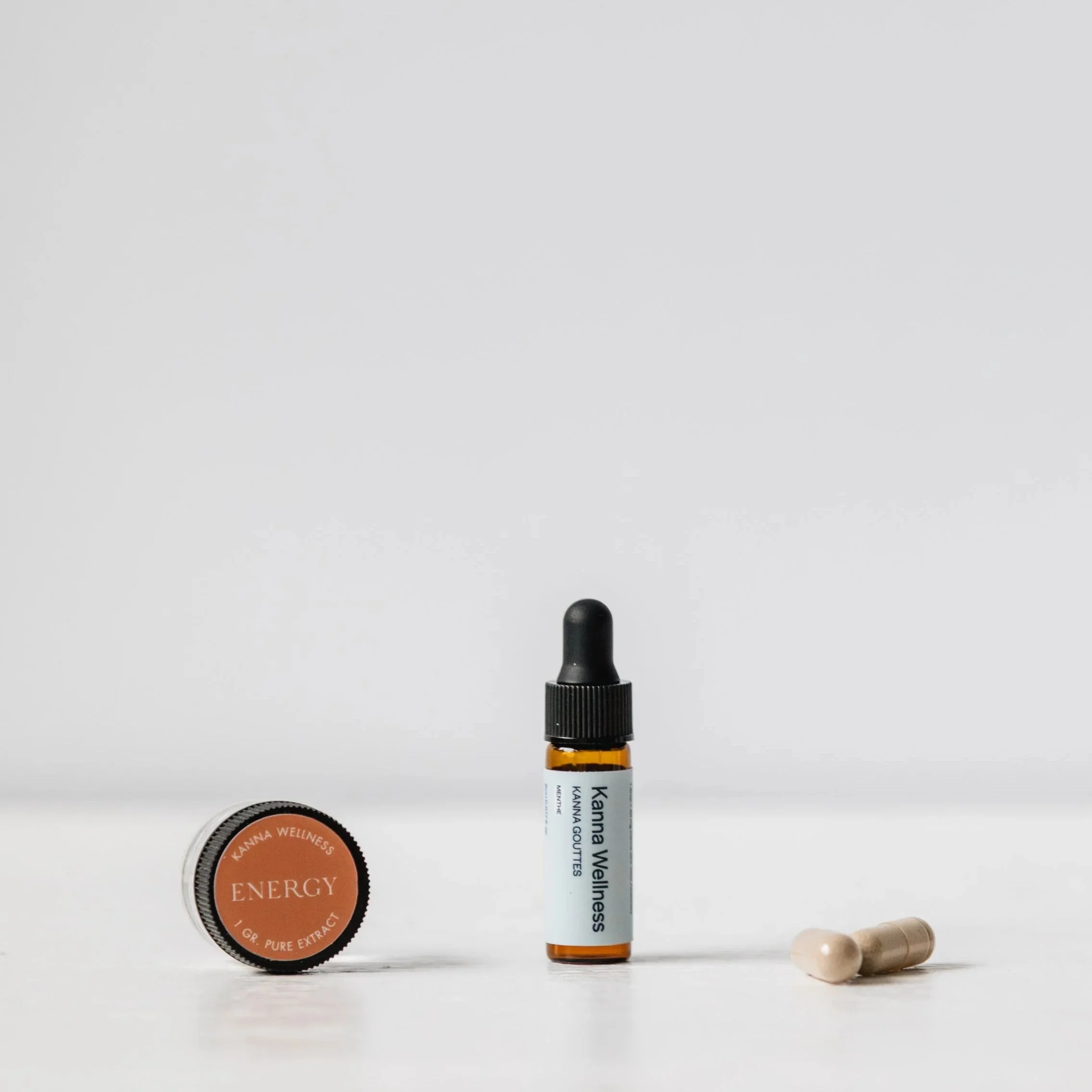
Kanna Wellness
Kanna (Sceletium tortuosum) is a South African plant traditionally used for mood, connection, and calm clarity.
Our formulations are designed for real life—creativity, social ease, focus, and sober-curious living.
At Kanna Wellness, we focus on:
clearly labeled alkaloid profiles
intentional formulations for focus, connection, and calm
ethical sourcing and transparency
third party lab testing & unparalleled potency
Currently shipping within Canada.
LISTEN
Things Mentioned in This Episode
Show Links:
Kanna Wellness: MODERN15 to get 15% off your first order (Canada only)
1:1 Psychedelically-Informed coaching: $500 OFF for March + April start dates
Doing the Work w/ Iboga: Iboga Prep & Integration
About Lana Pribic:
Lana Pribic, M.Sc., is an ICF Professional Coach, co-founder of Kanna Wellness, and producer & host of the Modern Psychedelics Podcast. With over 230 hours of professional training and four coaching certifications, Lana specializes in psychedelically-informed coaching, guiding individuals through profound inner transformation. Based in Ontario, she merges the power of psychedelics, consciousness, and self-discovery to facilitate deeply impactful experiences. When she's not immersed in her work, you'll likely find her dancing to electronic beats, creating art in the kitchen, practicing patience with her cat, curating her dream wardrobe, or diving into a book.

Looking for a professional coach to support you on your psychedelic path?
Look no further! Along with being the host of the Modern Psychedelics Podcast, Lana is a 3x certified professional coach who works with people on the psychedelic path.
-
Hello and welcome back to the Modern Psychedelics Podcast. If you're new here, welcome, because I have been doing this show for six years now. Can you believe it? Six. Years of talking about psychedelics, sharing my journey , and interviewing the world's leading experts on the topic.
So welcome. Today's topic is deeply personal for me. Because over the last year since I sat with Iboga for the second time, I have been navigating an identity crisis, and I wanna talk about it today. I wanna talk about how most of what we hear about psychedelics focuses on the positives, the healing, and the expansion, and the clarity and the.
Breakthroughs. I get that. I've talked about all of those things a lot on my [00:01:00] show, but the reality is that we don't talk enough about how, for many people, myself included, the psychedelic experience can trigger a identity collapse sometimes after a big experience. You're left wondering, who even am I?
What do I actually know to be true about myself? Where have I been lying to myself? Where have I not been seeing myself clearly? Where am I in misalignment with the truth inside of myself? How am I still living in a past version of myself? It can feel like the ground beneath you has collapsed and.
Instead of answers, you're left with questions and you're stuck in this liminal space where the past feels confusing and you can't trust it. The future feels completely uncertain, maybe even scary, [00:02:00] and there's nothing really solid to hold onto. Your sense of self has collapsed, and so this is what we're talking about today, that post psychedelic identity.
Crisis. This experience can be incredibly challenging to hold, to move through and to integrate. It takes a lot of time. It takes patience and grace and a light heart. It takes truth and facing oneself over and over again and support. It takes all of these things to come out on the other side.
And while I can't sit here and lie and tell you that I am on the other side of this. I can share with you some guidance and tools and specific exercises that have been helping me in moving through a time of questioning deeply who I am and what I want out of this life. [00:03:00] So if you identify with an identity crisis, a collapse of self, keep listening.
So let's start here. What is an identity crisis? I did a little bit of research for this episode and very famous psychologist, Eric Erickson, you may have heard of him, he describes an identity crisis as a time of intense analysis and exploration of different ways of looking at oneself while.
Identity crises are often associated with adolescence. Identity formation and identity is really fluid. It's ever evolving and it's a lifelong process. There may be times like a posts psychedelic experience where this search for identity and meaning is at an apex and more intense than others, but identity.[00:04:00]
Evolves as we encounter new experiences and challenges and perspectives, and just as we learn more about who we are and what life is all about. An identity crisis can happen at any stage in your life, whether you're 13 or 30, or 63 or 83. And due to the confronting, clarifying, intense nature of psychedelics, which tend to speed things up, they can often trigger this type of.
Existential crisis and time of challenge. And so in the psychedelic space, we often will refer to an identity crisis as existential confusion, or I've even seen it called ontological shock. I think that this can happen both on a universal spiritual level where maybe you have come into [00:05:00] information or perspectives that question the nature of reality.
And I would put that more in the realm of existential crisis. I. But it can also happen on a very interpersonal level, questioning who you are, what your values are, what your life is all about. So it can be in the micro or the macro today specifically, I'm talking about that more micro personal, human identity crisis level of an existential shock.
But I think that. What I'm sharing today can also apply to people who are navigating more existential, spiritual, macro, universal level confusion and questioning. Existential or identity confusion can show up as prolonged and long-term distress after a psychedelic experience where your previous worldview or sense of self no longer feels stable or true.
Hence, feeling like the rug has been [00:06:00] completely pulled out from under you. And this can lead to anxiety. Depression, feeling a lack of purpose and motivation, confusion about oneself or about reality, about the world, and a fragmented sense of self. It doesn't resolve quickly. Uh, it's super bumpy. It's really messy, and for most people navigating this, it's not uncommon for it to go on for months and months and potentially even years.
Speaking from personal experience, uh, nearly a year after Iboga, I can say that navigating an identity crisis in a time of questioning can feel very heavy, confusing, lonely, and at times suffocating. And so I have learned that there are ways though to support yourself through it and to move through it with.
With grace [00:07:00] and with love, and in a way that still feels like you are moving forward. Jules Evans is a psychedelic journalist in the space, and I just wanna quote him here. I was looking at one of his, uh, earlier essays from about two years ago, and he puts it really beautifully he says, for some this phase of bewilderment might lead to a new worldview, which they come to see as more true and more valid than their pre-trip worldview. But the journey from the old world to the new world can be long confusing and frightening, and some questions are never neatly answered.
End quote. I describe this as. Thinking about a book, you kind of see the last page of the book, but you're at the beginning, and so you have to live through the entire story. Kind of knowing where it [00:08:00] ends or knowing the flavor of the ending, but not really sure how to get there. And I think that that perfectly describes the nature of integration as well when we are navigating something like existential shock or identity confusion.
So this is really about trying to understand who you are, who you have been, and who you are becoming. Let's talk about some symptoms that present during identity crisis, and I have sourced a website called the Luan Center. I'll have all the sources that I'm quoting here linked below. Um. Number one, the number one symptom of navigating an identity crisis is that you are questioning your core self.
You're constantly questioning your values, beliefs, purpose in life, your identity, your career, or your relationships. You're trying to understand what actually matters to you. Number [00:09:00] two, anxiety and depression. Mental health can definitely take a toll while navigating an identity crisis. There can be a heightened sense of stress, anxiety, or low mood.
There can be emotional overwhelm and instability due to uncertainty. It can feel uncomfortable, disturbing, honestly and hopeless. And this all makes sense because you're navigating a time of uncertainty and it makes sense that your mental health would struggle during this time. There's also this contorting and shape shifting that can take place during an identity crisis.
You can feel inconsistent in who you are. There's that gap between who you were and who you now maybe know yourself to be or this like new information that you're learning about yourself. There are. Kind of fluid values and priorities during this time. You're adapting your identity [00:10:00] depending on environment or people, which again makes sense because your sense of self is kind of.
A puzzle. So you're trying to figure it all out as you go. You're contorting to different places and spaces and people. You're trying on different costumes and versions of yourself. And just asking yourself like, is this true? Is this who I am? Does this make sense for me? Um, number four is low self-trust.
You're doubting your ability to make decisions. You're feeling disconnected from your inner guidance or truth. That can be very common. And lastly, there can be low motivation during a time of identity crisis. There can be a lack of direction or purpose. There can be difficulty in making decisions big or small.
And ultimately, you know, as a, as a coach, as a professional coach, uh, this can lead to. I feeling stuck and feeling uncertain about just how to move forward. And this is something that I often see in my clients. [00:11:00] And so those are kind of the symptoms and how an identity crisis presents itself on a day-to-day basis.
And now I wanna get into the real meat of today's episode. I'm gonna present with you nine. Specific tools and kind of pieces of guidance that I have to share with you for how to navigate a posts psychedelic identity crisis. So let's get into it.
Number one is to anchor into what you do know about yourself and about your life. So when I was in complete and utter shock. After the Iboga ceremony that kind of cracked open parts of myself that I was keeping hidden behind shame, during the retreat at Atrio, which you guys can, listen to the previous episodes I've done about this experience.
There was [00:12:00] a wonderful therapist. Her name is Violet. She was a huge support for me on this integration day, and she had me do an exercise that was incredibly grounding in the moment and kind of set a very solid foundation for this identity crisis phase that I entered into. So. The therapist, violet told me to make a list of everything that I knew to be true about myself at this time.
Regardless of this new information, regardless of confusion that you may be navigating, there are things that are true about you. Regardless, and so you can make this list of what these things are. You can ask yourself, what do I like? What do I care about? And I'm passionate about? What have I been through?
What defines me? How do I like to spend my time? What's important to me? Again, even in a state of confusion and shock, there are still [00:13:00] things that are true. About who you are. For example, uh, some things that I wrote on my list were things that don't have to be super complicated or deep, right? They can be surface level or they can be deep.
It doesn't really matter. The, the key is just to capture these grounding elements. So some things that I wrote about myself were. I have a big heart. Uh, my perfect Sunday involves a latte, almond croissant, and vintage shopping. I enjoy reading books. Always have, I have a natural eye for photography. My body moves very freely to.
Electronic bass music. I'm a romantic. I love deeply. I want love. I love making an eating sourdough bread. I love to cook. I love food and trying new restaurants. These are things about me that are just true. It's part of who I am. It's a part of my identity no matter what. These very simple truths are so [00:14:00] grounding, and they remind you that you're still you.
And so this is where. You should start, make a list of everything that you know to be true about yourself, and you'll be surprised at how grounding and comforting is number two. And this is another exercise that Violet had me do that morning. Very simple again, but making a list of all of the people in your life who love you and support you and accept you regardless of who you are, what identity you are, or what life isn't.
You are in what you're navigating. There are people in your life who will love, support and accept you no matter what. This reminds you that you're loved and supported, that you're not alone, that there are people who love you for you, not for the masks that you wear or the experiences that you have.
These can be your friends, your family, coaches, therapists, [00:15:00] medicine providers, mentors, your ancestors, and even acquaintances. Try this because you might be surprised at how long this list actually turns out to be and how much love and support you have in your life. And remember that love and support looks very different and there's many different versions of being loved and supported.
Number three. This one is really, really important and it's learning to see anxiety for what it is. Again, going back to the symptoms of navigating an identity crisis, anxiety, stress, uncertainty. Is that an all time high at this point in your life? I know for me, I didn't experience anxiety for years and years after kind of starting my healing journey with psychedelics, I was like, wow.
I always had anxiety as a young adult and before kind of getting to this [00:16:00] better place in my mental health. The last year I have been experiencing. So much anxiety. It's kind of been a shock because I just, I haven't been in a place where anxiety has been a part of my life, and so I've been having to reorient myself towards a.
Spotting anxiety for what it is in the moment. It's important to recognize that anxiety and fear live in the mind. They live in our thoughts. So during this time, mastering your thoughts and your mind is half the battle. Honestly, the mind is not a great place to be in when navigating some sort of existential crisis.
And so it's important to recognize first and foremost that thoughts are not real. Research suggests that the average person experiences approximately 6,200 separate thoughts per day, and 80 to [00:17:00] 95% of these thoughts are repetitive rather than new Not every thought deserves attention, and your seriousness not only are most thoughts repetitive, but they're not true.
And so. I wanna remind you guys, I've spoken about this many times before, but in the BTI philosophy, which is the philosophy and tradition that holds the Iboga medicine, direct lived experiences, Trump thoughts, and so how do we connect to our direct lived experience, right? We pay attention to the body and to sensations.
Returning to sensations is really. Simple. You tune into what you can see with your eyes, what you can hear with your ears, what you can feel through sensations in the body, what you can taste, what you can smell. And for the people who are really connected to their intuition, [00:18:00] what you know without knowing how you know it.
All of these senses are more true than thoughts in the mind. So part of mastering anxiety, part of mastering anxious, repetitive, intrusive thoughts is coming back to direct lived experiences and sensations. Even if your mind is saying, I'm not safe for whatever reason, your senses will likely tell a different story.
You can look around and see that actually I am in a safe space right now. There is no danger present in this moment. I can feel that my body, if I ignore those thoughts, has no danger. That is threatening it. I can hear that there is a tranquility and a silence in the space that indicates that there is nothing to be alarmed or alerted about.
And so anxiety shrinks the moment that it's identified [00:19:00] for what it is. A thought, a future projection, a fear, something that may or may not be true, and. Learning to master and navigate anxiety and the mind. I would encourage people to find a statement that feels grounding to you and that reminds you of what is true and what is not true for me.
That anchor grounding statement was something that I received directly in my iboga ceremony. It was when the medicine said, I don't know the future. I only know the now. I don't know what's gonna happen in the future, but what I do know is that I can connect to what is true for me right now in this moment by being present in my life.
Through my senses and not my mind. Always come back to what is true for you right now, while acknowledging that there are uncertainties about what may or may not [00:20:00] come, and this is a process. This is not something that is to be perfected or achieved, rather. It is a continuous process, something to constantly remind yourself to come back to as a practice, and the more you practice it, the more it becomes a way of living and a way of showing up and interacting with your life.
The fourth piece of guidance that I have for anyone who's navigating an identity crisis is to prioritize emotional care. You are likely feeling pretty big, overwhelming emotions during this time. Shame, grief, confusion, anxiety, sadness, despair. It's all valid, but like our thoughts, emotions are not truth like lived experiences, but they are information [00:21:00] and I even place a greater weight on emotions than I do thoughts when it comes to giving us information and guiding us to the places that.
We need to go in order to come out. On the other side, emotions are energy in motion. Emotions are naturally fluid moving through us. They're not meant to be stable, and I believe that as human beings, it is normal and healthy and part of the human experience to experience, navigate and hold. The entire spectrum of emotions in a day, in a year, and in a lifetime.
Emotional care looks like giving yourself lots of time to rest, to down regulate, and to be off. This makes space for the emotions. This creates a safe container for all of the emotions, whatever they are to [00:22:00] live. And so you can support yourself by resting luxuriously, being very, very generous in how much time and space you give yourself.
To rest, now is not the time to be Go, go, go with a packed schedule, distracting yourself, the body, the nervous system, the mind, they all need to rest. Whatever that looks like for you. Reducing expectations now is not the time to have very high standards and expectations about your performance and output.
Okay? It can look like journaling, any type of self-reflection, anything that helps you to be present with your emotions. So for a lot of people that's journaling. Um, for some people it may be exercising, running anything that allows you to just really be with yourself. And give [00:23:00] space to what's showing up for you.
Another important and crucial part of emotional care is support. So speaking to a therapist, having trusted people in your life. Opening up to trusted friends and family members and I do want to encourage you to really take time and care and discernment with who you share the most vulnerable and deep parts of yourself with in your life.
I know for me, I have only shared the intimate details of my most recent iboga experiences with a handful of people. I could count them on one hand. The experience for me was so. Uh, um, vulnerable and full of shame and something that I'm still trying to understand myself, and so it's important that. I don't share it with so many people who cannot hold it and who would also distort the lens or perception that I am seeing this experience through.
So again, having a therapist, [00:24:00] a trained mental health professional who is going to be non-judgmental and knows how to navigate with care, these very tender and vulnerable pieces of the human is. Really important. I have been seeing my therapist this year, and so know that you're going to be processing big emotions, which requires a lot of energy, like emotions, our energy in motion.
Again, the deeper and more strongly those emotions are felt, the more energy is required of you. And so. That energy that is used to process and feel and understand and hold your emotions would otherwise be put towards probably output productivity. Um, you know, we all have to make money. We all need to have jobs.
Uh, well, most of us anyways. Maybe some lucky people out there listening are blessed and don't necessarily have to prioritize that. That time, which is [00:25:00] a beautiful thing for you. But you know, most of us have to show up to work. We have to make money. And so holding this reality with you do your best to keep up with your work life while accepting that your bandwidth, your capacity for output at this time is limited.
A great skill to learn at this time is compartmentalization, which I have to, uh, give a shout out to my ex-boyfriends for being, uh, professionals at
compartmentalization is something that I always saw as a negative thing, and maybe not even a negative thing, but something that just, I don't know if it's a woman thing or I don't know, but I. I have felt that compartmentalization of emotions has always been really, really challenging to me. And actually after my five MEO experience, Steve, uh, really helped me navigate compartmentalization.
, He really encouraged me to, you know. Have this like pep talk with myself and, and [00:26:00] kind of tell myself like, okay, I'm gonna sit down at the computer. I'm gonna take a client. I'm gonna do work for two hours. And then after that, I am going to give myself space to return to holding this and processing this.
But for now, I'm just gonna put it away. And so we want to compartmentalize our emotions in this way. We don't want to ignore them, we don't want to run away from them, but we do need this tool of compartmentalization in order to navigate the rest of life. And so I hope that helps you. . Wherever you are, don't run away from your emotions.
Move towards them, run towards them. Remember, there's no bad parts. Hug the bear. Realize that the bear isn't so scary after all, while also navigating the demands of real life, whether it's work, children, family relationships.
Okay, let's move on to number five. So something that I encourage people who are navigating everything that comes along with an identity crisis [00:27:00] is to consider sobriety or to reduce intoxication in general. And that's because clarity is something that is essential at this time. Substances can increase anxiety.
They can create confusion and delusion. They can pull you away from presence and honestly, just make things more challenging than they need to be. The other things that come along with intoxication are hangovers, a groggy mind, low energy. It can start to feel like self-harm during this time. I personally paused, uh.
You know, cannabis for the most part during this time because it got to a point where the anxiety that I would experience while smoking cannabis started to feel like self-harm. And so something very gentle and non intoxicating could be supportive. You know, maybe [00:28:00] a glass of wine, maybe something that is useful at this time.
Um, maybe something like kana. Is supportive, which is something that is not intoxicating, but also supportive for emotional balance, cognitive clarity, and nervous system support. That is one tool that I go back to again and again during psychedelic integration, but perhaps now is not the time to go back to more medicine work and.
Enter altered states. Work with what you've got. If you're navigating an identity crisis, you have a lot of content and a lot there for you. If it feels supportive for you, everyone's different. If it feels supportive for you and your process. You know what you need. Listen to that. If you're feeling like another medicine experience is appropriate for you at this time, proceed cautiously.
But at the end of the day, only you know [00:29:00] what's best for you overall. It may be tempting to run away from ourselves at this time through intoxication and altered consciousness, but know that. You're only going to get to that next phase of your life. On the other side of this identity crisis with clarity, when you face yourself honestly and soberly.
Speaker: If you have been listening to this podcast for a while, you have probably heard me talk about kana, and today I wanna share something special. I started Canada's first kana company, Kana Wellness, because I truly, truly believe that this plant has a place in hectic, chaotic, undersupported modern life.
Kana is a psychoactive plant. But it's not psychedelic, it's a gentle, grounded, and incredibly supportive little plant from South Africa's desert [00:30:00] region. It can help with uplifting mood, promoting cognitive clarity and focus . Gently supporting energy, relational openness, and nervous system balance, it's quite remarkable.
So whether you're working, creating, connecting, or just trying to feel a little bit more grounded in yourself, kana meets you where you're at. And what I love most about KANA is how versatile it is. You can use it day to day for mood support, calm and presence, replacing traditional. Psychedelic micro doses, but it also has an amazing place in social settings supporting sociability and connection without the crash or chaos of alcohol and other substances.
, It's em pathogenics, so you're gonna get that nice heart open social feeling with it, and it can even support performance and recovery or be used for inner [00:31:00] immersions and emotional processing when you want to go inward. KANA is an empathogen, which means that it's heart opening while still being grounding, presence, enhancing and clear.
It's gentle, yet surprisingly effective, and it's a sober friendly alternative for recreational spaces. It is something that's suitable for daily use with a strong body of research behind it. And a solid safety profile. So if you are in Canada and you're curious to explore, you can shop@kanawellness.com.
And for my dear podcast fam, here, I have a special code for you, modern 15 for 15% off your first order. So shop now support my little business with my mom. At kana wellness.com, that's K-A-N-N-A wellness.com. That's linked for you in the show notes, and it's modern 15 for 15% [00:32:00] off your first order.
Speaker: Okay. The sixth tip that I have for you is to keep living your life. This one's important, and this is something that took me a very long time to realize. You are allowed to live your life and experience joy while also healing you can have a full life and experience the joy of life in the midst of your identity crisis.
In the midst of this confusion you may be feeling, make space for joy. Do things that you love. And as you do things that you love, pay attention to yourself. What are these moments of true enjoyment? Pay attention to what you're naturally drawn to. This is key information about who you are, about what makes you, you.
Which I don't know if you're navigating identity [00:33:00] confusion, that sounds like really valuable information. And so this is a tip that feels particularly important for people who are navigating identity confusion. Joy is something that has so much information about who you naturally are as a human being.
Do the things that make you happy, even if you have to force yourself. It is worth it. So you can spend time with friends. You can read fiction or watch film and get lost in really interesting, beautiful stories that move you and change you. You can go dancing, get out of your mind and into your body. You can cook and host dinner parties for friends.
You can travel for a change of scenery. Play sports scrapbook. Get into a hobby, throw yourself into pottery. You know, the, the options are endless, but what's really, really important here is that [00:34:00] isolation breeds despair. Like I said, if you have to force yourself to get outside, to get in front of people to pursue hobbies, you will feel better for it.
Connection creates stability. Have a social calendar. One thing that I have been doing. Post recent breakup, but also navigating just this time of challenge. I bought myself. If you're watching this on video, I'll show it, but I bought myself this little moleskin, uh, 2026. Calendar. It's, it's a mini one.
And while I am a slave to my Google calendar, I bought this specifically for managing my personal life, my social calendars, things to look forward to, self-care, hair appointments, nail appointments, facials, whatever, massages. This is my little daily planner for me, for my life. [00:35:00] And it's my little.
Glow up. It's my healing. it's my fun planner. So I would encourage people to do something like that. Really have things to look forward to. I have at least one social event on my calendar every weekend. I try to do something fun during the week. And related to this is the next tip, which is to curate your inputs carefully.
There is so much talk right now about analog living screen time, staying off of social media, especially in this time of artificial intelligence. I just learned about like these AI based influencers and social media personalities and podcast hosts, and that was frightening to me. Um. But one thing that I was researching during this episode that I came across was advice for navigating a identity crisis, um, [00:36:00] which said to avoid over intellectualization, stepping away from trying to solve the experience through the relentless research, and instead focusing on daily life, on the mundane, on the little mole skin.
Calendar on the day-to-day living. You know, my workouts also are going in here. And so this tip to avoid over intellectualization really hit home for me because sometimes researching about the specific identity crisis or the challenge or. Whatever you're navigating, it can be validating and helpful.
It can give us frameworks, perspectives, and validation. Hearing other people's stories can sometimes be useful, but what I have found is that it can also be incredibly anxiety provoking sometimes.
It can [00:37:00] put your experience into a box. It can take away the self-agency of defining this experience for yourself. And so when navigating a crisis in identity, the whole point is to go inwards because your story, your journey, your truth is unique to you and the whole. way that we move through an identity crisis is by learning about who we are.
So while we're in this very tender emotional state, avoiding over intellectualization of your experience can mean avoiding, yes, research and reading books, but it also means. Over researching how other people got through it, how other people define themselves, how other people see themselves. This is a process of self-discovery, first and foremost, and the clarity will come from you, not external sources.
And so this is what makes curating [00:38:00] inputs this tip. So important. The place where most of us get our inputs these days is through the internet, is through social media. to kind of throw it back to what I was speaking into at the start of this tip, right, that's screen time is.
A major alarm. As you explore your sense of self limiting social media and maybe getting off altogether is a really good idea because this is the place where you are. Are inundated with other people, other people's identities, other people's stories, other people's challenges, which can honestly add to the confusion and frustration because you feel like, well, maybe I should be on the other side.
Why isn't my story and my journey tied up in a neat little bow like this person's. Like this person saw it that way. Maybe I should see it that way too. Remember that this is your journey. [00:39:00] So limit social media, limit constant consumption of other people's identities and stories. If they feel like they're starting to put you in a box or create anxiety for you about what this journey is supposed to look like for you instead.
I really encourage you to choose more intentional curated inputs. We do all need to consume. Being a human involves a certain level of consuming entertainment and inputs, but instead of doing it through social media and content on the internet, look at art. Look at culture, travel, and experience inputs rather than consume them, right?
Fiction books, reading, uh, film. These are more intentional inputs that you can use to. Process [00:40:00] emotions to remember that you are not alone. I have been processing my big emotions and the messiness of all of this by reading fiction rather than the personal development and nonfiction that I have been reading and consuming over the years to me right now, fiction feels like a much more intentional way to consume inputs and entertainment. Particularly, I do wanna share this with you guys just because I wanna share how specific and like niche and curated this can be. I have been particularly drawn into the world of literary fiction. This is a genre that I just kinda like.
Was able to put a name to, because I kept reading these books that are considered literary fiction. This is a genre that is shaped by really messy human characters that are navigating complex life [00:41:00] situations. Literary fiction often features vague, messy endings., So these stories, these characters, these endings.
Reflect real life, and I am finding such deep validation and joy through reading these stories. I'm also calling back a core piece of my true identity. The bookworm. The inner child. The inner teenager who found meaning and connection through fiction when she felt incredibly misunderstood when she was seeking answers within herself and.
In this way reading fiction, particularly literary fiction, is healing me. It's so supportive to me, and so I encourage just anyone to allow themselves to be moved and changed and challenged by fictional characters and stories that are intentionally put together by authors.[00:42:00]
Um, just for fun, I'll share some titles that I have really been enjoying recently. Tomorrow, and tomorrow. And tomorrow by Gabrielle. Vin. Whoa, that book incredible. And I learned that they are creating a feature film on this, on this story, and I'm so, so excited. I mean, it is an incredible, incredible story with just such real characters, uh, in term mezo by Sally Rooney, a masterpiece of emotional processing, being let into the psychological realm of people who are navigating immense grief and confusion and in a way yeah, identity.
Restructuring, uh, ghosts by Dolly Alderton. So good, uh, all the way to the river., More of a memoir, but in the form of a story. And also City of Girls by Elizabeth Gilbert. Loved both of those. I am currently reading a book [00:43:00] called. All fours by Miranda July. This is, I'm more than halfway through. This is about as messy as it gets.
It's about a woman navigating her own identity crisis. She is moving through a midlife crisis as a wife and a mother. And it's incredibly interesting. So for right now, for me, books are the way that I am curating my entertainment and my inputs. For you, it may be film, it may be art, it may be music, it may be travel, but just being more intentional about what you're consuming because everything that you consume will move you.
So just be careful about. The ways in which you're allowing yourself to be moved and inspired during this incredibly potent face. Let yourself be moved but not overwhelmed, indulge in the messiness of your crisis. [00:44:00] It helps a lot. So happy consuming.
Okay. Number eight. We're getting to the end here. Focus on your blessings. Ugh. This is just, this is everything. I want you to identify often, moment to moment, what is stable and supportive in your life. This is a tip that. Is really about reorientation. And so bringing this gentle awareness and focus to everything in your life that you do have, everything that you have to be grateful for, that you are blessed by, especially in this time of.
International tension, political unrest. There's like more wars happening right now than ever in the world. I mean, during this time, first of all, that gives so much perspective and grounding, I find the smaller the things that I find to be grateful for, the more deeply I feel gratitude [00:45:00] towards them. This gives perspective. Um, it really is about the little things. And I just wanna share with you guys what my gratitudes sound like these days. I have a roof over my head and a safe place to rest at night.
Like I get to sleep every night in peace and quiet. I have food in the fridge. I have the freedom to walk outside freely and safely and not be bothered by anyone. I have two parents and a brother who are alive and healthy. There is money in the bank. I am blessed with friends who love and support me.
I have amazing clients in my life that I get to walk their journeys with. Uh, the world is full of art for me to indulge in. There's so much to take in that is beautiful and, and human. Uh, I am able bodied and healthy. Like this one is huge. I'm, uh, the older I get, I'm [00:46:00] 35 right now. The older I get, the more grateful I am for my body and for my health.
'cause there are so many people in this world that are not, I have access to healthcare, uh, incredible healthcare, being a Canadian citizen. I have technology that allows me to connect with others all over the world and to create art and to create things of substance. Uh, I have access and support through a therapist, through a coach, through medicine providers, like I live on this amazing earth.
You see, it's really about the simple things that. I have access to and that I have in my life that I can be grateful for. And this isn't about writing a gratitude list. This isn't about like, okay, every morning I'm gonna sit down and write a gratitude list of everything that I'm grateful for today. You can do that if you want.
That's like something that's never really stuck for me. This is more about. Reorienting yourself in the moment, day to [00:47:00] day, to what you do have as a way to gain perspective, but also just feel gratitude amongst the messiness of it all. In the moment, notice your blessings. Count your blessings. All of the things that actually make you one of the more lucky, blessed, and fortunate people on this planet perspective really is everything, perspective and grounding.
When things feel uncertain, it reminds you that the good always comes with the bad, and that is the duality of life. It's the yin and the yang. It's the light and the dark. Even in this time of crisis, there is support. There is a floor that is there for you to fall on your knees and just surrender. There is a floor, even if it feels like it's unstable.
Lastly, number nine. Reframe your crisis as an expansion. I [00:48:00] have to thank my incredible therapist who I have been seeing on and off for seven years for this one. In a recent session with her last week, she challenged me on my use of the word identity crisis, and she said. Perhaps this isn't a crisis .
Perhaps this is a period of expansion. And this landed for me as truth because it's not that I don't know who I am. The truth is actually that I am getting to know myself more deeply. I am peeling the onion. I have been peeling the onion for years. And I am at the core, at the core wound, at the core shame.
And it's an expansion. It's not a crisis. And. I am building, I am evolving. I am refining who I am rather than throwing myself out the window and having to start from [00:49:00] scratch. I am contributing to a canvas that is already there and painted on and been created. I'm just taking the paintbrush and adding more to it, and maybe there's like parts that I'm painting over that I no longer want to.
Present to the world or to be true, and maybe there's like pieces of white canvas that I'm like, wow, this was once blank and now I'm filling it in with something new. Right? It's, uh, it's about expanding, adding, refining, evolving, not destruction, and not a complete tear down. And this is where I wanted to end today because.
It really comes full circle to tip number one, which was writing down everything that you know to be true about yourself, right? We are here on this earth, I believe, to learn about ourselves, and we are all on our own journey. We're all unique, and only we can discover and [00:50:00] uncover who we truly are, and at some point in your identity crisis, the work becomes more forward facing.
It becomes the expansion. And at this point, instead of viewing this as a phase of questioning and uncertainty, it can be useful and true to see it as a phase of expansion and growth. And perhaps it's both. Perhaps it's questioning and uncertainty, and perhaps it's expansion and growth. And you know, actually as I say that, that that actually feels more true and more accurate, right?
We're learning to hold it all. Right, the good, the bad, the light, the dark, the uncertainty with the certainty, the blessings with the chaos. You don't have to force yourself to arrive at this reframe before you're ready, but you will get there because nothing in life stays the same. You will get to a place where you want to move forward and you want to expand into this.[00:51:00]
And so if you are here. It can be useful to reflect on things like, what am I expanding into? Who am I becoming? What am I leaving behind? What am I creating space for? What have I been creating space for? Without even noticing what parts of myself feel steady and sure in this moment, what is my truth in this moment?
How do I become open to uncertainty? So I guess what I'm really trying to say here is that perhaps an identity crisis is part breakdown, part transformation, right? The challenge is to start to see the crisis as a process of. Seeing yourself more clearly than ever before, which is such a gift. Clarity leads to aligned action, and that leads to authentic living.
Authentic living feels right. It feels good because you are being [00:52:00] you and you're here on this planet to be you, and it really is as simple and complicated as that, and so. I hope that one thing that's been landing for you is that. You don't have to navigate this alone, and you shouldn't navigate this alone.
I talked a lot about therapy in this episode, and I encourage anyone who is struggling and feeling challenged with elements of their past and elements of navigating grief or shame or uncertainty to to lean into the supportive therapy. Coaching is something that is also very useful At this time, coaching is more oriented towards the future and building an expansion.
So if you are in a phase of reframing the breakdown into an expansion, you know, I personally am seeing both a therapist and a coach at this time where the therapist is helping with the, the processing and the shame and the healing of the past. And my [00:53:00] coach is helping me expand into and move into. And take a aligned action towards where I want to go.
So as a professional coach, my work is consciousness based and psychedelically informed. It's focused on helping folks move through transitions. Uh, transitions are my specialty and. With that transition, building a life that is aligned with who you are, with your truth and what it is that you truly desire.
So if you're in this phase and you are looking to enlist support, I do wanna share that for the month of March. And I'm also exp ending this. Into April, I am offering $500 off of my six month coaching program, which is a bit of a slow burn psychedelic experience in and of itself where I very sharply and directly sometimes confrontationally, uh, shine a mirror back to you and look at just [00:54:00] who you are in a really honest way.
I also have custom coaching offers available personalized coaching offers for people who are not ready to commit to six months. And of course, I also have my Ebo GA prep and integration course and program called Doing the Work with Iboga. I will have a. Links for all of that in the show notes. If you're listening on Spotify, apple, or YouTube, you can also visit modern psychedelics.net, and then there is a work with Me tab that will have all of my different offerings and programs.
If you would like to work with me this spring and want to start in either March or April, know that you will receive $500 off of the investment. You can apply now in the links, in the show notes, or you can just reach out to me at hello@modernpsychedelics.net. If you have any questions at all, I do hope to hear from you.
And if you are navigating this time of uncertainty, know that I am right [00:55:00] there with you and know that this is probably one of the most important, beautiful, expansive, defining moments of your life. So. Just remember that you are certainly not broken. There is definitely nothing wrong with you. You are in a transition, and even if it doesn't feel like it, there is something deeper that is more aligned and more true that is being formed beneath the surface, under the tip of the iceberg.
So. Take your time, stay close to yourself, support yourself and trust that clarity will come. And I'm curious to hear from you which of these tips, most with you. I would love to hear from you. Either comment here below. In Spotify, or go on modern psychedelics, the Instagram handle and you can DM me or leave a comment.
But I would just love to hear from you and love to hear how you're navigating [00:56:00] your own existential or identity crisis. Thanks so much for listening. I so enjoyed. Putting this podcast episode together for you today, all on my own without ai. Uh, this is an episode that really came from me and my direct experience in navigating this challenging time.
So I hope you enjoyed it. We'll talk soon and sending you a big hug. Bye.